Brampton is the ninth most populous municipality in Canada and the regional seat of the Regional Municipality of Peel. It is also the third most populous city in the Greater Golden Horseshoe urban area, behind Toronto and Mississauga. Brampton is part of the Greater Toronto Area (GTA), located in the Canadian province of Ontario, and is a lower-tier municipality within the Peel Region. The City of Brampton is bordered by Vaughan to the east, Halton Hills to the west, Caledon to the north, Mississauga to the south, and Etobicoke (Toronto) to the southeast. Named after the town of Brampton in Cumberland, England, Brampton was incorporated as a village in 1853 and as a town in 1873, and became a city in 1974. The modern City of Brampton was formed following an amalgamation of several surrounding townships and communities. The city was once known as "The Flower Town of Canada", a title referring to its abundance of greenhouses and strong floriculture industry in the 1860s. It maintains the term "Flower City" as its slogan.
Timeline
Notable People
Photos




Full History
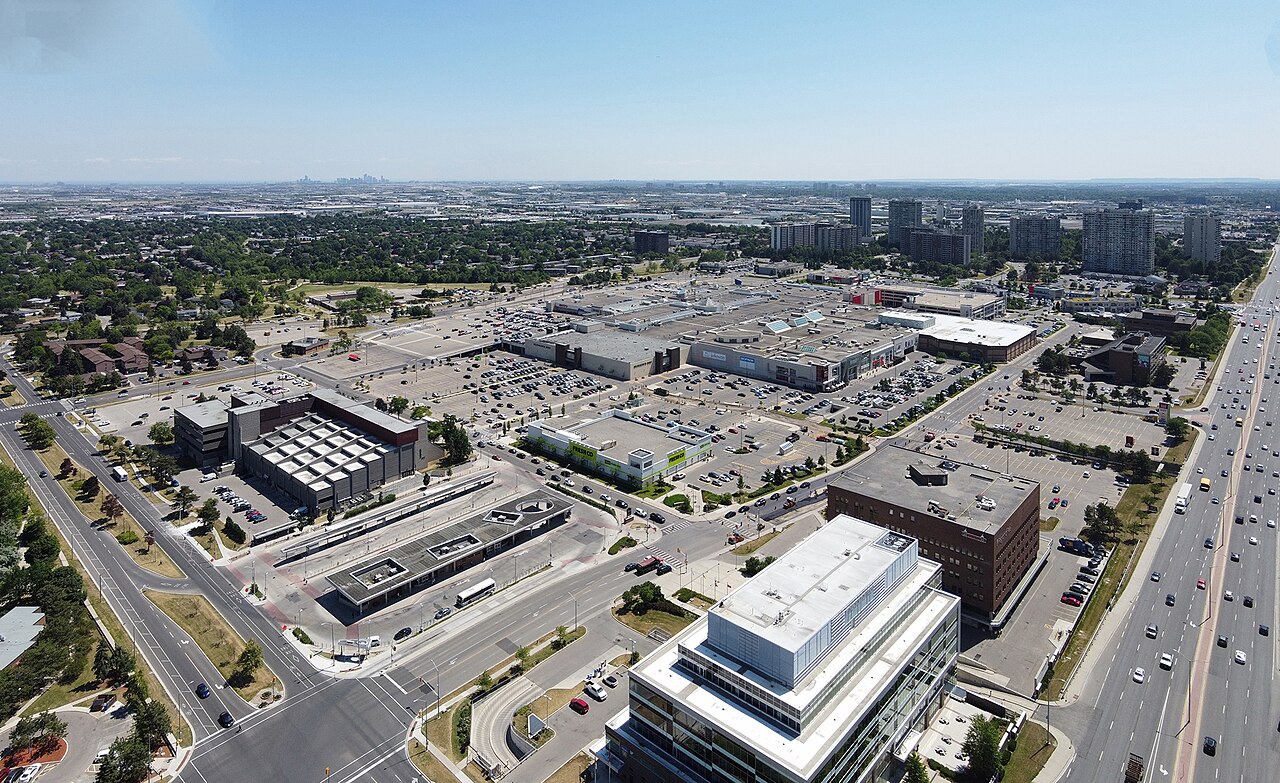
Before the arrival of British settlers, the Mississaugas of the Credit First Nation held of the land north to the head of the Lake Purchase lands and extending to the unceded territory of the Chippewa of Lakes Huron and Simcoe. surrendering the area to the British Crown. Prior to the 1830s, most business in Chinguacousy Township took place at Martin Salisbury's tavern. One mile from the corner of Hurontario Street and the 5th Sideroad (now Main and Queen Streets in the centre of Brampton), William Buffy's tavern was the only significant building. At the time, the intersection was referred to as "Buffy's Corners". By 1834, John Elliott laid out the area in lots for sale, calling it "Brampton", which was soon adopted by others. In 1853, a small agricultural fair was set up by the newly initiated County Agricultural Society of the County of Peel and was held at the corner of Main and Queen streets. Grains, produce, roots, and dairy products were up for sale. Horses and cattle, along with other lesser livestock, were also sold at the market. This agricultural fair eventually became the modern Brampton Fall Fair. In that same year, Brampton was incorporated as a village. Dale's Nursery had become the town's largest and most prominent employer, and was the largest cut flower business in North America, producing 20 million blooms and introducing numerous rose and orchid cultivar to the market. By 1869, Brampton had a population of 1,800. It was incorporated as a town in 1873. A Brampton Water Works filtration plant was built south of the lake, located where present-day White Spruce Park is. Today the city uses water from other sources, and Heart Lake is now the centerpiece of Heart Lake Conservation Area. A federal grant had enabled the village to found its first public library in 1887, which included 360 volumes from the Mechanic's Institute (established in 1858). In 1907, the library received a grant from the Carnegie Foundation, set up by United States steel magnate and philanthropist Andrew Carnegie, to build a new, expanded library; it serves several purposes, featuring the Brampton Library. The Carnegie libraries were built on the basis of communities coming up with matching funds and guaranteeing maintenance. In 1902, Sir William J. Gage (owner of Gage Publishing, a publishing house specializing in school textbooks) purchased a portion of the gardens and lawns of the Alder Lea estate (now called Alderlea) that had been built on Main Street by Kenneth Chisholm in 1867 to 1870. (Chisholm, a merchant and founding father of Brampton, had been the Town reeve, then warden of Peel County, then MPP for Brampton and eventually, Registrar of Peel County.) Gage donated of the property to the town, with a specific condition that it be made into a park. Citizens donated $1,054 and the town used the funds to purchase extra land to ensure a larger park. A group of regional farmers in Brampton had trouble getting insurance from city-based companies. After several meetings in Clairville Hall, they decided to found the County of Peel Farmers Mutual Fire Insurance Company. In 1955, when the company moved to its third and current location, 103 Queen Street West, it took the new name of Peel Mutual Insurance Company. It reigns as the longest-running company in modern Brampton. Harmsworth Decorating Centre was established in 1890, as Harmsworth and Son, operated out of the family's house on Queen Street West. The current location was purchased on September 1, 1904, after a fire destroyed their original store. Purchased for $1,400, the 24 Main Street South location is the longest-operating retail business in what is now Brampton. In 1963, the town established The Flower Festival of Brampton, which was based on the Rose Festival in Portland, Oregon, United States. It began to market itself as the Flower Town of Canada. to promote a connection to its flower-growing heritage. The intention was to inspire design projects and community landscaping to beautify the city, adopt a sustainable environmental approach, and to protect its natural and cultural heritage. A self-guided historical walking tour of downtown Brampton called "A Walk Through Time" is available at Brampton City Hall and online at no cost. Planned as an innovative "new town", Bramalea was developed in the 1950s immediately east of the Town of Brampton in Chinguacousy Township. It was Canada's first satellite community developed by one of the country's largest real estate developers, Bramalea Limited. The name "Bramalea" was created by the farmer William Sheard, who combined "BRAM" from Brampton, "MAL" from Malton (then a neighbouring town which is now part of the city of Mississauga), and "LEA", an Old English word meaning meadow or grassland. He sold the land to Brampton Leasing (the former name of the developer) and built one of Bramalea's first houses on Dixie Road. The community was developed according to its detailed master plan, which included provisions for a parkland trail system and a "downtown" to include essential services and a shopping centre. The downtown's centrepiece was the Civic Centre, built in 1972 to include the city hall and library. Directly across Team Canada Drive, a shopping centre, Bramalea City Centre was built. These developments were connected by a long tunnel, planned to provide protection from winter weather. The tunnel has long since been closed due to safety issues. In 1974, the Ontario provincial government decided to update Peel County's structure. It amalgamated several towns and villages into the new City of Mississauga. In addition, it created the present City of Brampton from the town and the greater portion of the Townships of Chinguacousy and Toronto Gore, and the northern extremity of Mississauga south of Steeles Avenue, including Bramalea and the other communities such as Churchville, Claireville, Ebenezer, Victoria, Springbrook, Coleraine, and Huttonville. While only Huttonville and Churchville still exist as identifiable communities, other names like Claireville are re-emerging as names of new developments. The province converted Peel County into the Regional Municipality of Peel. Brampton retained its role as the administrative centre of Peel Region, which it already had as county seat. The regional council chamber, the Peel Regional Police force, the public health department, and the region's only major museum, the Peel Art Gallery, Museum and Archives, are all located in Brampton. This change had its critics among those with a strong sense of local identities. Bramptonians feared urban sprawl would dissolve their town's personality. Bramalea residents took pride in the built-from-scratch and organised structure that had come with their new satellite city and did not want to give it up. Others in Bramalea accept they are part of Brampton, and they make up a "tri-city" area: the original Brampton, Heart Lake, Bramalea. In 1972, Chinguacousy built a new civic centre in Bramalea. Two years later, when Brampton and Chinguacousy merged, the new city's council was moved from its modest downtown Brampton locale to the Bramalea building. The library systems of Brampton and Chinguacousy were merged, resulting in a system of four locations. Some have questioned the future of Peel Region as encompassing all of Brampton, Mississauga, and Caledon. The Mississauga council, led by Mayor Hazel McCallion, voted to become a single-tier municipality and asked the provincial government to be separated from Peel Region. They argued the city has outgrown the need for a regional layer of government, and that Mississauga is being held back by supporting Brampton and Caledon with its municipal taxes. In the early 1980s, Cineplex Odeon closed the Capitol Theatre in Brampton. The City bought the facility in 1981 under the leadership of councillor Diane Sutter. It adapted the former vaudeville venue and movie house as a performing arts theatre, to be used also as a live music venue.
Source: Wikipedia