Chelmsford () is a city in Essex, England. It is the county town of Essex and one of three cities in the county, along with Colchester and Southend-on-Sea. It is located 31 miles (50 km) north-east of Charing Cross in London, and 22 miles (35 km) south-west of Colchester. At the 2021 census the built up area had a population of 110,625. It gives its name to the wider Chelmsford local government district which also covers an extensive surrounding area. Chelmsford as a settlement started growing after 1100 AD, when a bridge across the River Can was built. The town grew in importance after King John issued a Royal Charter in 1196, allowing Chelmsford to host a market, and by 1219 the town had become the county town of Essex. Chelmsford was involved in the Peasants' Revolt of 1381, and King Richard II moved on the town after quelling the revolt in London.
Bell Homestead National Historic Site
Alexander Graham Bell made the world's first long-distance telephone call from his father's homestead in Tutela Heights, just minutes from West Brant. The Bell Homestead National Historic Site preserves the farmhouse and coach house where Bell conducted his early telephone experiments in the 1870s. Open seasonally for tours.
Timeline
Photos




Full History
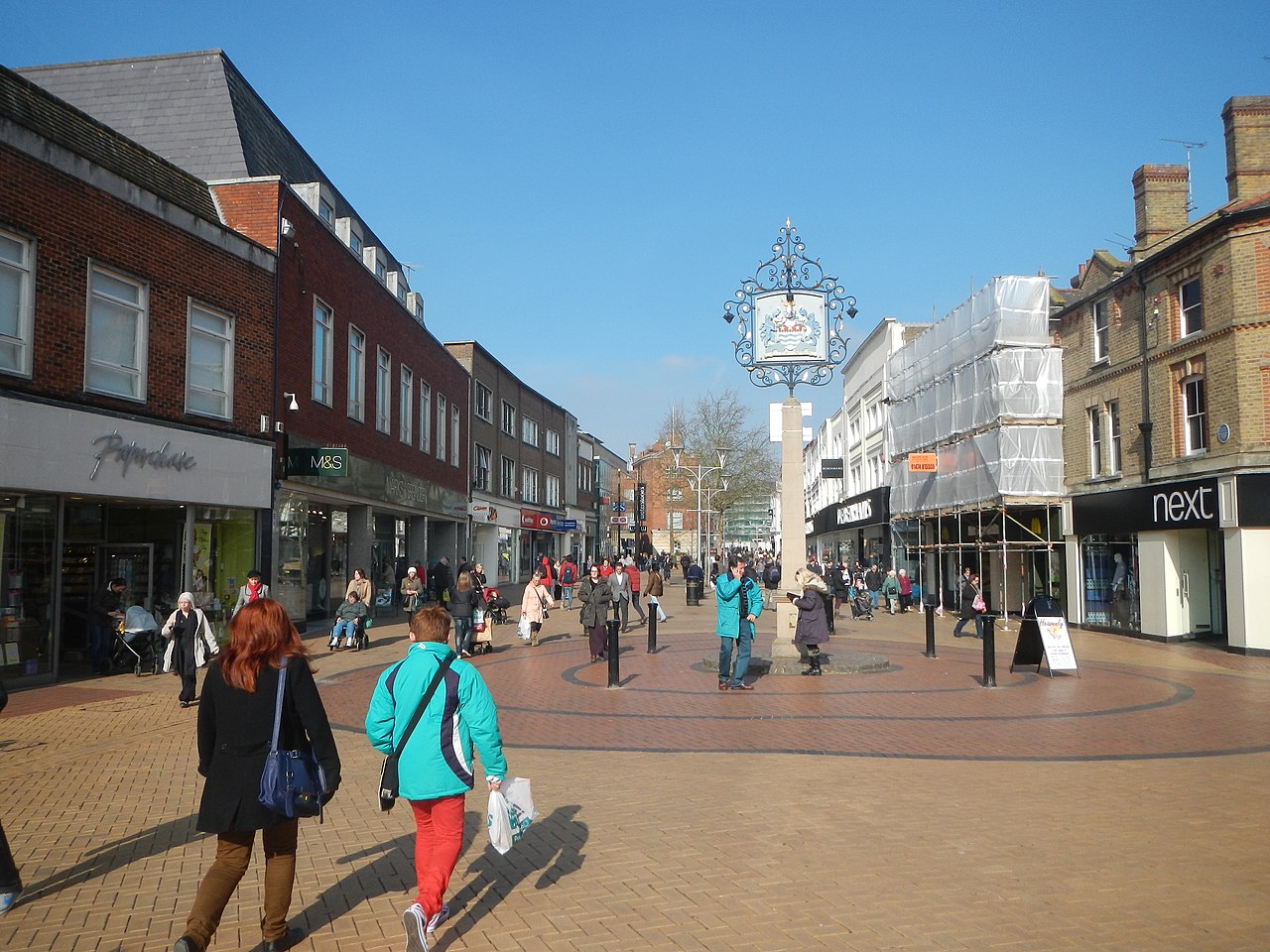
Before 1199, there were settlements nearby from ancient times. The remains of a Neolithic and a late Bronze Age settlement have been found in the suburb of Springfield, and the town was occupied by the Romans. A Roman fort was built in AD 60, and a civilian town grew up around it. The town was given the name of Caesaromagus (Caesar's field or Caesar's marketplace), although the reason for it being given the great honour of bearing the Imperial prefix is now unclear – possibly indicating that it was on this site that Roman Emperor, Claudius, defeated the remaining British armies during the Roman conquest of Britain, before capturing Camulodunum. The remains of a mansio, a combination post office, civic centre and hotel, lie beneath the streets of modern Moulsham, and the ruins of an octagonal temple are located beneath the Odeon roundabout. In 2025, archaeologists from Archaeology South East found three bodies during a dig at the former Moulsham Street car park. An Anglo-Saxon burial was discovered at Broomfield to the north of Chelmsford in the late 19th century and the finds are now in the British Museum. The road 'Saxon Way' now marks the site. The city's name is derived from Ceolmaer's ford. In the Domesday Book of 1086, it was listed as Celmeresfort. The Domesday Book records that it was then owned by the Bishop of London and had four households, a mill, had three ploughing teams available to the bishop as lord of the manor, of meadow and enough woodland to support 300 pigs. It also gave its name to the wider Chelmsford hundred which covered surrounding villages. In the year 1100, Maurice, Bishop of London, commissioned the construction of a bridge over the River Can. The bridge meant the traffic flowed through the area instead of Writtle, which grew in importance and size. Chelmsford's first parish church was built around the same time as the grant of the market charter. The church, dedicated to St Mary the Virgin, was completely rebuilt during the 15th century. The town became the seat of the county assizes during the early 13th century (though assizes were also held at Brentwood) and by 1218 it was recognised as the county town of Essex, a position it has retained to the present day. King Robert I of Scotland, better known as Robert the Bruce (1274–1329), had close ties with the nearby village of Writtle and there is some evidence to suggest he was born at Montpeliers Farm in the village, but the story is disputed and possibly conflated with his father, Robert de Brus, 6th Lord of Annandale. Chelmsford was significantly involved in the Peasants' Revolt of 1381, and King Richard II moved on to the town after quelling the rebellion in London. 'The Sleepers and The Shadows', written by Hilda Grieve in 1988 using original sources, states: "For nearly a week, from Monday 1st July to Saturday 6th July [1381], Chelmsford became the seat of government ... The king probably lodged at his nearby manor house at Writtle. He was attended by his council, headed by the temporary Chancellor ... the new chief justice ... the royal chancery ... Their formidable task in Chelmsford was to draft, engross, date, seal and despatch by messengers riding to the farthest corners of the realm, the daily batches of commissions, mandates, letters, orders and proclamations issued by the government not only to speed the process of pacification of the kingdom, but to conduct much ordinary day-to-day business of the Crown and Government." Richard II famously revoked the charters which he had made in concession to the peasants on 2 July 1381, while in Chelmsford. It could be said that given this movement of government power, Chelmsford for a few days at least became the capital of England. Many of the ringleaders of the revolt were executed on the gallows at what is now Primrose Hill. King Henry VIII purchased the Boleyn estate in 1516, and built Beaulieu Palace on the current site of New Hall School. This later became the residence of his then mistress, and later wife Anne. Soon after it became the residence of Henry's daughter, by his first marriage, Mary I. In the 17th century many of the victims of Matthew Hopkins (the self-styled "Witchfinder General") spent their last days imprisoned in Chelmsford, before being tried at the assizes and hanged for witchcraft. In 1835, when visiting Essex and Suffolk to cover local elections, Charles Dickens visited Chelmsford. He was apparently so upset that he could not find a newspaper on a Sunday that he wrote in a letter to a friend that Chelmsford was "the dullest and most stupid place on earth". In 1899 Guglielmo Marconi opened the first "wireless" or radio factory in the world at Hall Street in the Moulsham area of Chelmsford. In 1920 Marconi made the first official publicised sound broadcast in the United Kingdom, featuring Dame Nellie Melba at the New Street Works, the first purpose-built radio factory in the world. In 1922, Marconi made the world's first regular wireless broadcasts for entertainment (call sign "2MT") began from the nearby village of Writtle. Station 2MT led to the creation of its sister station in London "2LO", which subsequently led to the creation of the BBC. In 1914 Chelmsford's parish church was elevated in status to become Chelmsford Cathedral on the creation of the Diocese of Chelmsford, led by the Bishop of Chelmsford. During World War II Chelmsford, an important centre of light engineering war production, was attacked from the air on several occasions, both by aircraft of the Luftwaffe and by missile. The worst single loss of life took place on Tuesday 19 December 1944, when the 367th Vergeltungswaffe 2 or V2 rocket to hit England fell on Henry Road, a residential street near the Hoffmans ball bearing factory and the Marconi Wireless Telegraph Company factory in New Street. Both factories were key to the war effort. Thirty-nine people were killed and 138 injured, 47 seriously. Several dwellings in Henry Road were completely destroyed, and many badly damaged in nearby streets. A monument to the dead is located in the city cemetery on Writtle Road. On 14 May 1943 Luftwaffe bombing raids hit Chelmsford leaving more than 50 people dead and leaving nearly 1,000 homeless. The bombs hit mainly the town centre, Springfield, and Moulsham. The GHQ Line part of the British hardened field defences of World War II runs directly through Chelmsford with many pillboxes still in existence to the north and south of the city. Hylands Park, the site of the former annual V Festival, hosted a prisoner of war camp, and from 1944 until it was disbanded in 1945, was the headquarters of the Special Air Service (SAS). Since the 1980s defence-related industries in the city have declined, most notably the Marconi Company with all of its factories either being closed or sold. The site on West Hanningfield Road was sold to BAE Systems; the Waterhouse Lane site sold to E2V and the former New Street Works site has undergone major redevelopment for residential/mixed use. The one-time largest employer in Chelmsford, RHP (the former Hoffman ball bearing manufacturer), closed its New Street/Rectory Lane site in 1989. Some of the factory was converted into luxury apartments and a health club although most of the site was demolished to make way for the Rivermead Campus of the Anglia Ruskin University. The city's location close to London and at the centre of Essex has helped it grow in importance as a financial, administrative and distribution centre. The Channels Development, Beaulieu Park, The Village and Chancellor Park are some of the most recent large-scale housing developments built in the city. The local plan targets an additional 18,000 new homes by 2036, in developments largely to the north of the city. In 2007, the Channel 4 programme Location, Location, Location voted Chelmsford the 8th-best place to live in the UK. The letters patent officially granting city status to Chelmsford were received on 6 June 2012.
Source: Wikipedia