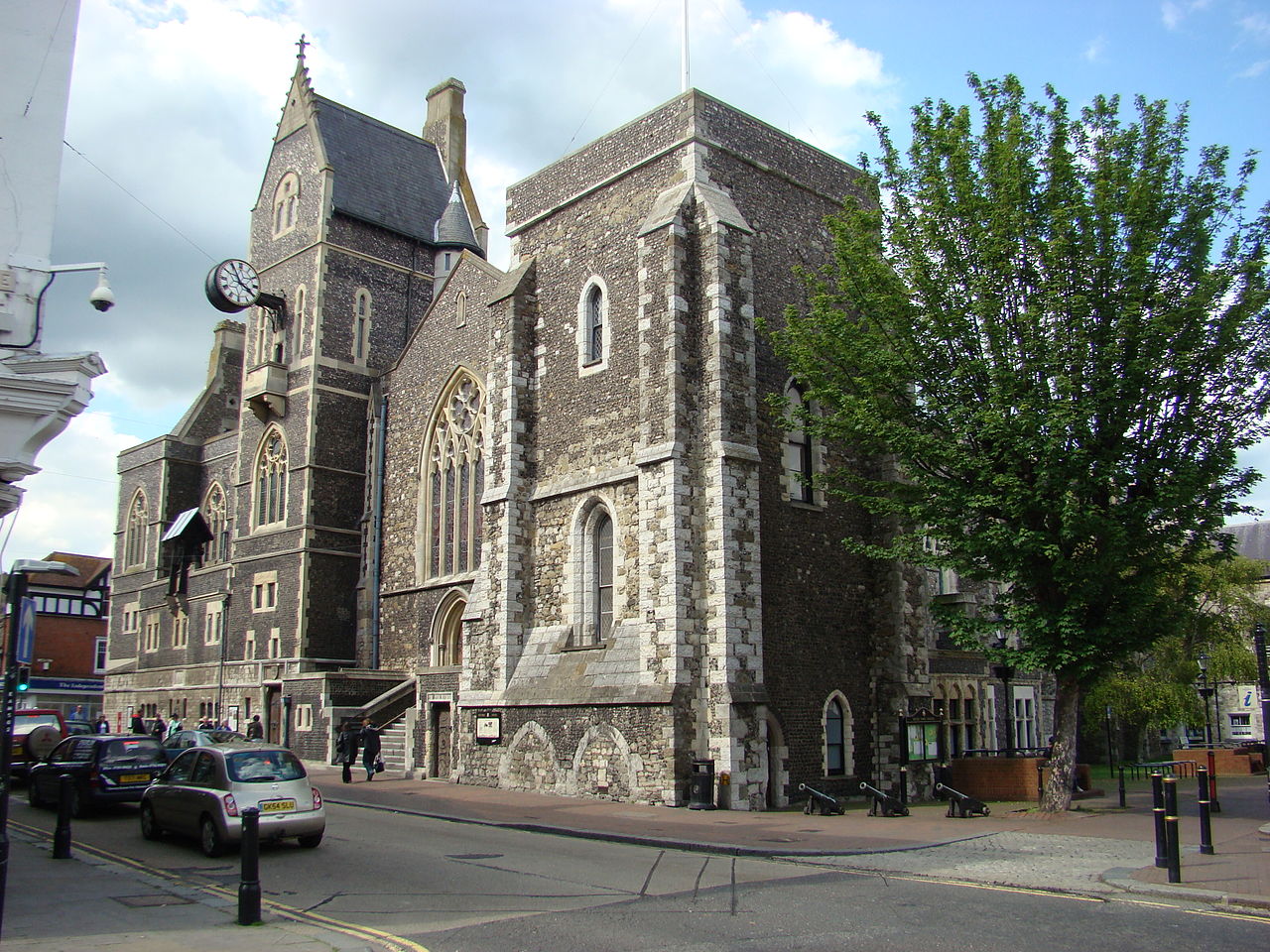
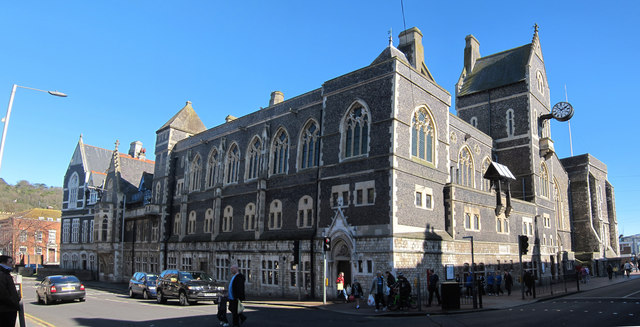
Dover ( DOH-vər) is a town, major ferry port and civil parish in Kent, England. It faces France across the Strait of Dover, the narrowest part of the English Channel at 33 kilometres (21 mi) from Cap Gris-Nez in France. It lies southeast of Canterbury and east of Maidstone. The town is the administrative centre of the Dover District and home of the Port of Dover. In 2024 it had an estimated population of 44,209. Archaeological finds have revealed that the area has always been a focus for peoples entering and leaving Britain. The name derives from the River Dour that flows through it. In recent times the town has undergone transformations, with a high-speed rail link to London, new retail in town with St James' area opened in 2018, and a revamped promenade and beachfront.
Bell Homestead National Historic Site
Alexander Graham Bell made the world's first long-distance telephone call from his father's homestead in Tutela Heights, just minutes from West Brant. The Bell Homestead National Historic Site preserves the farmhouse and coach house where Bell conducted his early telephone experiments in the 1870s. Open seasonally for tours.
Timeline
Notable People
Photos



Full History
Archaeological finds have shown that there were Stone Age people in the area, and that some Iron Age finds also exist. During the Roman period, the area became part of the Roman communications network. It was connected by road to Canterbury and Watling Street and it became Portus Dubris, a fortified port. Dover has a partly preserved Roman lighthouse (the tallest surviving Roman structure in Britain) and the remains of a villa with preserved Roman wall paintings. Dover later figured in the Domesday Book (1086). Forts were built above the port and lighthouses were constructed to guide passing ships. It is one of the Cinque Ports. and has served as a bastion against various attackers: notably the French during the Napoleonic Wars and Germany during the Second World War. During the Cold War, a regional seat of government was located within the White Cliffs beneath Dover Castle. This is omitted from the strategic objects appearing on the Soviet 1:10,000 city plan of Dover that was produced in 1974. The port would have served as an embarkation point for sending reinforcements to the British Army of the Rhine in the event of a Soviet ground invasion of Europe. In 1974, a discovery was made at Langdon Bay off the coast near Dover. It contained bronze axes of French design and is probably the remainder of the cargo of a sunken ship. At the same time, this find also shows that trade routes across the Channel between England and France existed already in the Bronze Age, or even earlier. In 1992, the so-called Dover boat from the Bronze Age was discovered in six metres depth underwater. This is one of the oldest finds of a seaworthy boat. Using the radiocarbon method of investigation, the boat's construction was dated to approximately 1550 BC. First recorded in its Latinised form of Portus Dubris, the name derives from the Brythonic word for water ( in Middle Welsh, in Modern Welsh apart from 'dwfrliw' (Watercolour) which has retained the old Welsh spelling, in Breton). The same element is present in the town's French name and the name of the river, Dour, which is also evident in other English towns such as Wendover. However, the modern Modern Welsh name is an adaptation of the English name Dover. The current name was in use at least by the time of Shakespeare's King Lear (between 1603 and 1606), in which the town and its cliffs play a prominent role. Louis VIII of France landed his army, seeking to depose King Henry III, on Dover's mainland beach. Henry III ambushed Louis' army with approximately 400 bowmen atop The White Cliffs of Dover and his cavalry attacking the invaders on the beach. However, the French slaughtered the English cavalry and made their way up the cliffs to disperse the bowmen. Louis' army seized Dover village, forcing the English back to Canterbury. French control of Dover lasted for three months after which English troops pushed back, forcing the French to surrender and return home.
Source: Wikipedia