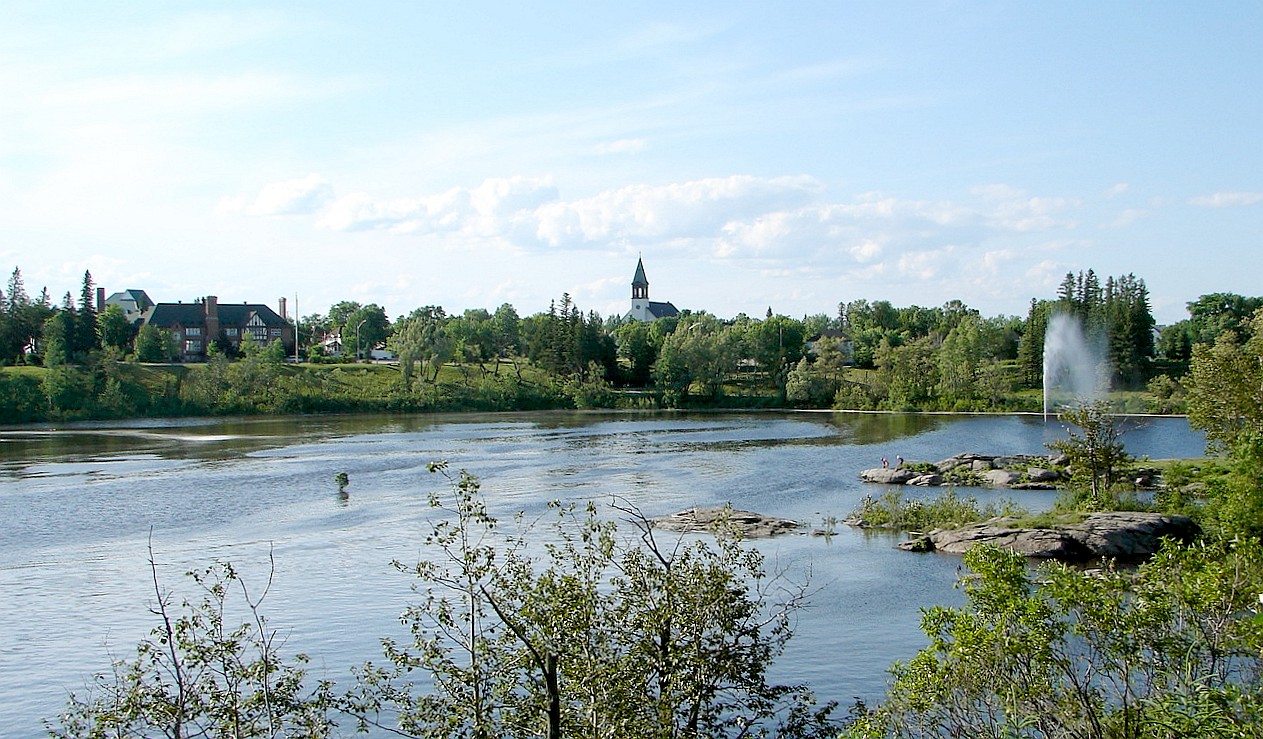
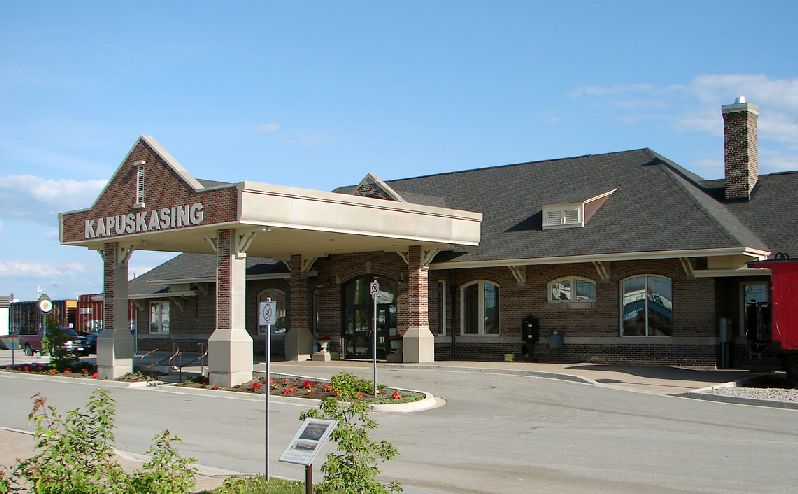
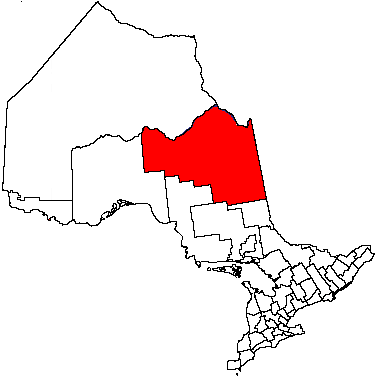
Kapuskasing ( KAP-əss-KAY-sing) is a town on the Kapuskasing River in the Cochrane District of Northern Ontario, Canada, approximately 92 kilometres (57 mi) east of Hearst and 130 kilometres (81 mi) northwest of Timmins. The town was known as MacPherson until 1917.
Bell Homestead National Historic Site
Alexander Graham Bell made the world's first long-distance telephone call from his father's homestead in Tutela Heights, just minutes from West Brant. The Bell Homestead National Historic Site preserves the farmhouse and coach house where Bell conducted his early telephone experiments in the 1870s. Open seasonally for tours.
Timeline
Notable People
Photos




Full History
thumb|left|Town centre of Kapuskasing Located near the western edge of the Clay Belt of "New Ontario", the town was founded in the early 20th century after the National Transcontinental Railway, forerunner of the Canadian National Railway, was built through the area in 1911. An Ontario Historical Plaque was erected by the province to commemorate the founding of Kapuskasing's role in Ontario's heritage. A post-war scheme to settle Canadian Corps combat veterans in the area proved unsuccessful. It was not until the start of pulp and paper milling operations in the 1920s that Kapuskasing began to develop as an organized community. Name taken from that of an early settler and assigned by postal authorities on October 7, 1936, "to correspond with the village known as {Val} Albert" (CPCGN files). Val Albert Improvement District, along with some unorganized area, was annexed by Kapuskasing in 1964. The Kapuskasing River Pulp and Timber limit, that included of timber and hydro leases at Sturgeon Falls, White Spruce Rapids (Spruce Falls) and Big Beaver Falls, was awarded to speculators Saphrenous A. Mundy and Elihu Stewart in 1917, and Spruce Falls Pulp and Paper Ltd. was incorporated, but no development took place. The still unexploited timber limits were sold to Kimberly-Clark in 1920. The new Spruce Falls Company Ltd. began the development of the first pulp mill in Kapuskasing under the direction of F.J. Sensenbrenner, a Vice President of Kimberly Clark Corporation for the next 20 years. The small sulphite mill started up in late 1922 with four 12-ton digesters and a daily output of 75 tons of pulp. Spent liquor was discharged untreated into the Kapuskasing River. Early development was plagued by major setbacks. Fire destroyed the construction camp and power project at Sturgeon Falls. A year's supply of pulpwood that was boomed up in the river was washed away in the spring flood. A fire at the new mill killed two workers and brought production to a halt. In 1923, a water storage and hydro electric dam was built by Morrow and Beatty Ltd. of Peterborough at Spruce Falls. In 1925, the Spruce Falls Company Limited was awarded additional timber limits to the north and south, bringing their total limits up to . In 1926, the Spruce Falls Power and Paper Company was incorporated under joint ownership of Kimberly-Clark and The New York Times. The new company negotiated two additional hydro power leases to the north on the Mattagami River at Smoky Falls and Devils Rapids. Work to build a 550 ton/day paper mill at Kapuskasing, a 75,000 HP hydro generating station at Smoky Falls and an railway and power line connecting the two got underway in the spring of 1926. The contractor for the entire project was Morrow and Beatty Ltd. of Peterborough. From July 13, 1928 until 2003, The New York Times was printed entirely on Spruce Falls paper. Facing massive modernization costs, The Times and Kimberly-Clark sold their stakes in the mill to its employees and Tembec Inc. in 1991. Even after selling the mill, The Times remained a legacy customer. However, they officially ceased using Kapuskasing newsprint in 2003. The company became known locally as "Uncle Spruce" in affectionate reference to the steady work and benefits provided to this distinct northern community for many decades. The mill was the focus of the Reesor Siding 1963 Strike, which saw three union workers killed. In 1997, Tembec became the sole owner of the mill which is now known as Tembec — Spruce Falls Operations. The Kapuskasing Inn was built in 1927–28 by George Roper Gouinlock, son of George Wallace Gouinlock, together with the Civic Centre (built 1928) and the former Sensenbrenner Hospital (built 1929, now Drury Place, a geared-to-income housing complex). They were commissioned by the Spruce Falls Company Ltd. These buildings were all built in an impressive Neo-Tudor style and would form the nucleus of the town. In 1951, the inn hosted Princess Elizabeth and the Duke of Edinburgh on their first visit to Canada. The landmark inn closed in 2002 and fell in disrepair but was slated for renovation by new investors. On May 22, 2007, youths set fire to the inn. It was damaged beyond repair. The arsonists were not charged as they were below the age of criminal responsibility at the time of the fire. The remains of the inn were demolished in May and June 2008. During World War I, the town was the site of one of the largest internment camps in Canada, at Bunk Houses in Kapuskasing from December 1914 to February 1920. The camp held over 1,300 German, Austrian, and Turkish prisoners, though originally the majority were civilian internees of Ukrainian descent who had emigrated from the provinces of Bukovina and Galicia, their homeland, which at the time were part of the Austro-Hungarian Empire, in the first wave of Ukrainian emigration to Canada prior to 1914. Prisoners were employed in the construction of buildings and clearing of land for a government experimental farm on the west side of the Kapuskasing River. Isolation provided ideal security for the minimum security camp, as the railway was the only access to the remote location. Prisoners who attempted to escape into the bush were turned back by endless muskeg and clouds of mosquitoes or minus-40 degree temperatures in winter. In 1917, most were paroled to help relieve labour shortages. Afterwards, the camp was used for prisoners of war and political radicals until its closure in 1920. Despite years of grief over the combat death of his brother, Captain Kirkconnell later wrote, "Generally speaking, I could feel little animus against our German prisoners. Guarding them was simply a job. It was their duty to try to get away and our duty to prevent it. The ingenuity that they displayed in their attempts to escape was being duplicated by our men in German captivity." A small cemetery is all that remains of the internment camp near the Kapuskasing Airport where victims of the 1918 influenza epidemic were laid to rest. An Ontario Historical Plaque was erected by the province to commemorate the Kapuskasing Internment Camp's role in Ontario's heritage. Governments of the day were mistakenly impressed with the agricultural potential of the Great Clay Belt. A federal government experimental farm had been established on the west side of the river to explore and develop crops and systems for farming the area. Under the Returned Soldiers and Sailors Act of 1917, the Kapuskasing Soldier Colony was established to settle veterans returned from the Great War. Settlers received homesteads, grants, and guaranteed loans and were paid for clearing their own land. However, by 1920 only nine of more than 100 original settlers remained, and the project was discontinued. The town may have ceased its importance as a location for a traditional military radar base, but has become a site for the Super Dual Auroral Radar Network that is involved with tracking and measuring ionospheric turbulence.
Source: Wikipedia