Mississauga is a Canadian city in the province of Ontario. Situated on the northwestern shore of Lake Ontario in the Regional Municipality of Peel, it borders Toronto (Etobicoke) to the east, Brampton to the north, Milton to the northwest, and Oakville to the southwest. With a population of 717,961 as of 2021, Mississauga is the seventh-most populous municipality in Canada, third-most in Ontario, and second-most in the Greater Toronto Area (GTA) after Toronto itself. However, for the first time in its history, the city's population declined according to the 2021 census, from a 2016 population of 721,599 to 717,961, a 0.5 per cent decrease. The growth of Mississauga was initially attributed to its proximity to Toronto. However, during the latter half of the 20th century, the city attracted a diverse and multicultural population. Over time, it built up a thriving, transit-oriented central business district of its own; the Mississauga City Centre. Malton, a neighbourhood of the city located in its northeast end, is home to Toronto Pearson International Airport, Canada's busiest airport, as well as the headquarters of many Canadian and multinational corporations.
Bell Homestead National Historic Site
Alexander Graham Bell made the world's first long-distance telephone call from his father's homestead in Tutela Heights, just minutes from West Brant. The Bell Homestead National Historic Site preserves the farmhouse and coach house where Bell conducted his early telephone experiments in the 1870s. Open seasonally for tours.
Timeline
Photos
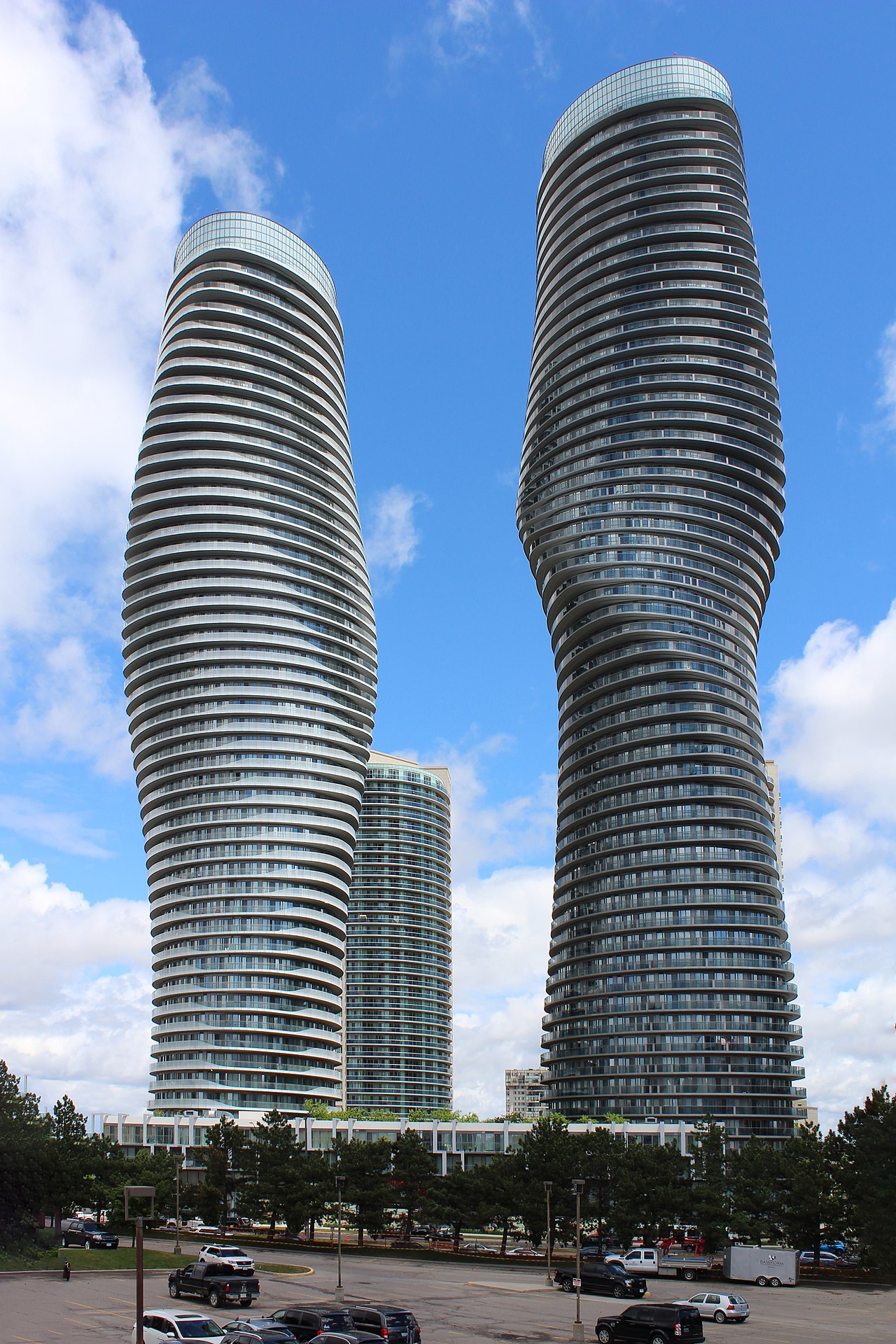


Full History
A single site in Mississauga with Hi-Lo projectile points was registered in the Ontario Ministry of Culture database of archaeological sites. Lake Ontario was much smaller at this time, and sites from this period may be 500 m into the lake. However, by 1687, the Haudenosaunee had abandoned their new settlements along the north shore of Lake Ontario. The European traders would gather annually at the mouth of what is now known as the Credit River to give the Anishinaabe credit for the following year. "From this, the Mississauga bands at the western end of the lake became known collectively as the Credit River Mississaugas." when officials from York (what is now the City of Toronto) purchased 85,000 acres (340 km<sup>2</sup>) of land from the Mississaugas under Treaty 14. After the land was surveyed, the Crown gave much of it in the form of land grants to United Empire Loyalists who emigrated from the Thirteen Colonies during and after the American Revolution, as well as loyalists from New Brunswick. A group of settlers from New York State arrived in the 1830s. The government wanted to compensate the Loyalists for property lost in the colonies and encourage development of what was considered frontier. In 1820, the government purchased additional land from the Mississaugas. Additional settlements were established, including: Barbertown, Britannia, Burnhamthorpe, Churchville, Derry West, Elmbank, Malton, Meadowvale (Village), Mount Charles, and Streetsville. European-Canadian settlement led to the eventual displacement of the Mississaugas. In 1847, the government relocated them to a reserve in the Grand River Valley, near present-day Hagersville. Pre-confederation, the Township of Toronto was formed as a local government; settlements within were not legal villages until much later. Except for small villages and some gristmills and brickworks served by railway lines, most of present-day Mississauga was agricultural land, including fruit orchards, through much of the 19th and first half of the 20th century. In the 1920s, cottages were constructed along the shores of Lake Ontario as weekend getaway homes for Torontonians. The first prototypical suburban growth of Toronto Township began after World War II, Applewood Acres was the first major planned development near the QEW and Dixie Road, and urbanization soon rapidly expanded north and west. In 1952, Toronto Township annexed the southern portion of Toronto Gore Township. Two large new towns; Erin Mills and (New) Meadowvale, were started in 1968 and 1969, respectively. Most of Mississauga was built out by 2005. While the Township had many settlements within it, none of them (save for the larger enclave communities of Port Credit and Streetsville) were incorporated, and all residents were represented by a singular Township council (Malton had special status as a police village, allowing it partial autonomy). To reflect the community's shift away from rural to urban, council desired conversion into a town, and in 1965 a call for public input on naming it received thousands of letters offering hundreds of different suggestions. "Mississauga" was chosen by plebiscite over "Sheridan" by a vote of 11,796 to 4,331, and in 1968 the reincorporation went forward, absorbing Malton in the process. Port Credit and Streetsville remained separate, uninterested in ceding their autonomy or being taxed to the needs of a growing municipality. Political will, as well as a belief that a larger city would be a hegemony in Peel County, kept them as independent enclaves within the Town of Mississauga, but both were amalgamated into Mississauga when it reincorporated as a city in 1974. At this time, Mississauga annexed lands west of Winston Churchill Boulevard from Oakville in the northwest, in exchange for lands in the northernmost extremity (which included Churchville) south of Steeles Avenue which were transferred to Brampton. That year, Square One Shopping Centre opened; it has since expanded several times. On 10 November 1979, a 106-car freight train derailed on the CP rail line while carrying explosive and poisonous chemicals just north of the intersection of Mavis Road and Dundas Street. One of the tank cars carrying propane exploded, and since other tank cars were carrying chlorine, the decision was made to evacuate nearby residents. With the possibility of a deadly cloud of chlorine gas spreading through Mississauga, 218,000 people were evacuated. Residents were allowed to return home once the site was deemed safe. At the time, it was the largest peacetime evacuation in North American history. Due to the speed and efficiency with which it was conducted, many cities later studied and modelled their own emergency plans after Mississauga's. For many years afterwards, the name "Mississauga" was, for Canadians, associated with a major rail disaster. The area's incumbent local exchange carrier, Bell Canada, splits the city into five pre-1970 rate centres – Clarkson, Cooksville, Malton, Port Credit, and Streetsville. However, they are combined as a single Mississauga listing in the phone book. The first Touch-Tone telephones in Canada were introduced in Malton on 15 June 1964. On 1 January 2010, Mississauga bought land from the Town of Milton and expanded its border by , to Highway 407, affecting 25 residents. Also in January 2010, the Mississaugas and the federal government settled a land claim, in which the band of indigenous people received $145,000,000 as just compensation for their land and lost income.
Source: Wikipedia