Rutland is a ceremonial county in the East Midlands of England. It borders Leicestershire to the north and west, Lincolnshire to the north-east, and Northamptonshire to the south-west. Rutland has an area of 382 km2 (147 sq mi) and had an estimated population of 41,443 in 2024, the second-smallest ceremonial county population after the City of London. The county is rural, and the only towns are Oakham in the west and Uppingham in the south; its villages include Cottesmore in the north and Ketton in the east. For local government purposes Rutland is a unitary authority area. The county was the smallest of the historic counties of England. The geography of Rutland is characterised by low, rolling hills, the highest of which is a 197 m (646 ft) point in Cold Overton Park. Rutland Water was created in the centre of the county in the 1970s; the reservoir is a nature reserve that serves as an overwintering site for wildfowl and a breeding site for ospreys.
Bell Homestead National Historic Site
Alexander Graham Bell made the world's first long-distance telephone call from his father's homestead in Tutela Heights, just minutes from West Brant. The Bell Homestead National Historic Site preserves the farmhouse and coach house where Bell conducted his early telephone experiments in the 1870s. Open seasonally for tours.
Timeline
Photos



Full History
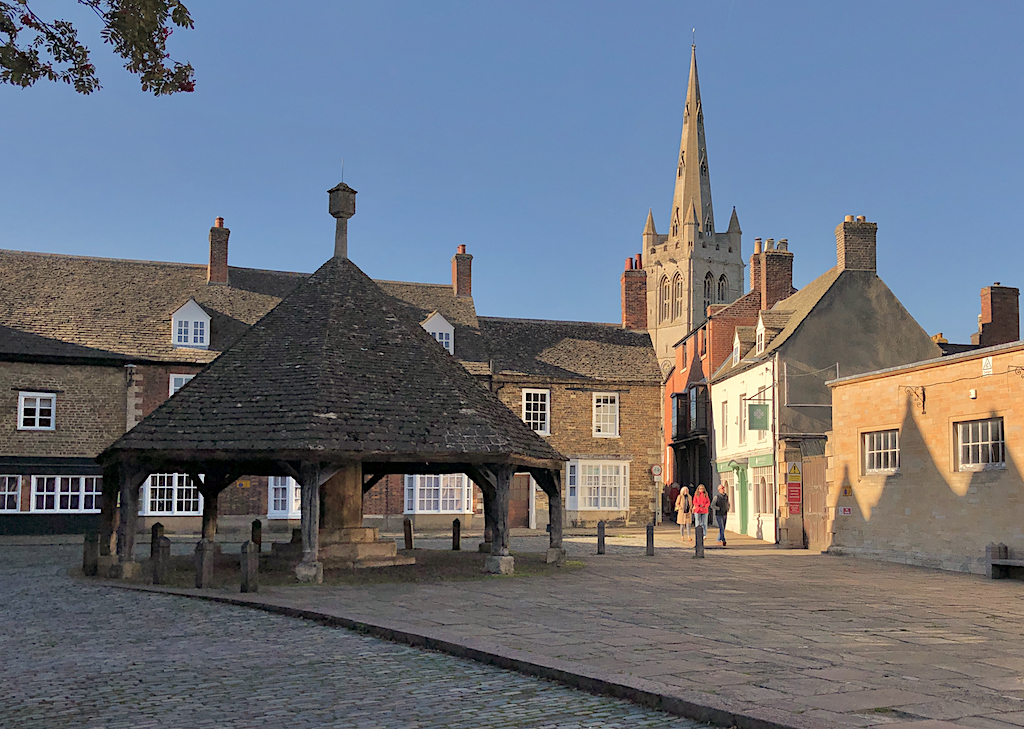
Rutland is referred to as Roteland in the Domesday Book (completed in 1086). The name means "land belonging to Rōta", with Rōta being an Old English personal name that meant 'the pleasant or cheerful one'. Earl of Rutland and Duke of Rutland are titles in the peerage of England held in the Manners family, derived from the historic county of Rutland. The Earl of Rutland was elevated to the status of Duke in 1703 and the titles were merged. The family seat is Belvoir Castle, Leicestershire. The office of High Sheriff of Rutland was instituted in 1129, and there has been a Lord Lieutenant of Rutland since at least 1559. Oakham Castle was built –1190 and is "one of the nation’s best-preserved Norman buildings" and is a Grade I listed building. By the 19th century it had been divided into the hundreds of Alstoe, East Rutland, Martinsley, Oakham and Wrandike. Rutland covered parts of three poor law unions and rural sanitary districts (RSDs): those of Oakham, Uppingham and Stamford. The registration county of Rutland contained the entirety of Oakham and Uppingham RSDs, which included several parishes in Leicestershire and Northamptonshire – the eastern part in Stamford RSD was included in the Lincolnshire registration county. Under the Poor Laws, Oakham Union workhouse was built in 1836–37 at a site to the north-east of the town, with room for 100 paupers. In 1894, under the Local Government Act 1894, the rural sanitary districts were partitioned along county boundaries to form three rural districts. The part of Oakham and Uppingham RSDs in Rutland formed the Oakham Rural District and Uppingham Rural District, with the two parishes from Oakham RSD in Leicestershire becoming part of the Melton Mowbray Rural District, the nine parishes of Uppingham RSD in Leicestershire becoming the Hallaton Rural District, and the six parishes of Uppingham RSD in Northamptonshire becoming Gretton Rural District. Meanwhile, that part of Stamford RSD in Rutland became the Ketton Rural District. Oakham Urban District was created from Oakham Rural District in 1911. It was subsequently abolished in 1974. Rutland was included in the "East Midlands General Review Area" of the 1958–67 Local Government Commission for England. Draft recommendations would have seen Rutland split, with Ketton Rural District going along with Stamford to a new administrative county of Cambridgeshire, and the western part added to Leicestershire. The final proposals were less radical and instead proposed that Rutland become a single rural district within the administrative county of Leicestershire. There was fierce local opposition to the plans, with even the local Conservative Party branch campaigning against it; the campaign included successful publicity stunts such as mounting a pretend battleship called HMS Rutland on a lorry and shooting fireworks at the offices of Leicestershire County Council, where the commissioners were based. On 1 August 1963 the Minister of Housing and Local Government, Sir Keith Joseph, announced that the proposed merger with Leicestershire would not be implemented, citing Rutland's case as "unique", while the opposition alleged that cancelling the merger was a purely political consideration seeking to appease Tory voters in Rutland who did not want to see their county lose its status. The historian Alexander Hutton suggests that the 1962 by-elections in Orpington (where the Liberal Party successfully campaigned as a protest vote against local government reorganisation) and Leicester North East (where Conservative activists from Rutland and Leicestershire refused to campaign, instead endorsing the Liberals) caused the Conservative government to reverse their decision regarding Rutland. and despite counties no longer being required for postal purposes, Royal Mail agreed to re-create a postal county of Rutland in 2007. This was achieved in January 2008 by amending the former postal county for all of the Oakham (LE15) post town and a small part of the Market Harborough (LE16) post town.
Source: Wikipedia