Tillsonburg is a town in Oxford County, Ontario, Canada with a population of 18,615 located about 50 kilometres southeast of London, on Highway 3 at the junction of Highway 19.
Timeline
Photos


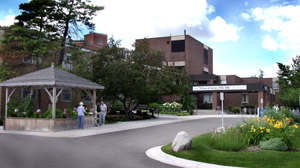
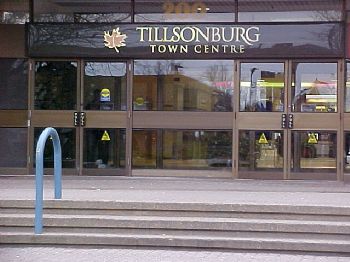
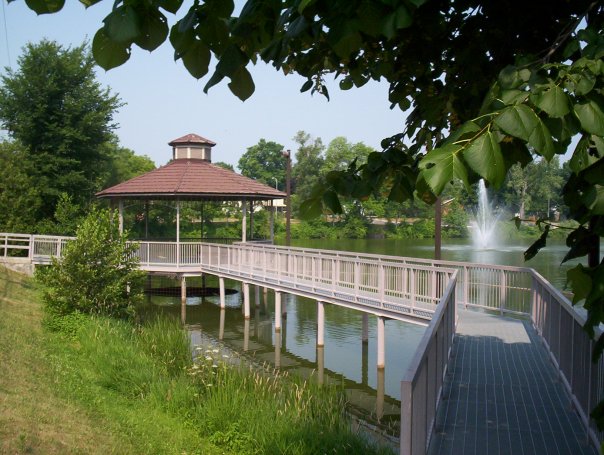
Full History
Prior to European settlement, the present site of Tillsonburg was home to Indigenous tribes. The Tillsonburg Village Site, a 14th century Iroquoian village, was excavated in 2001 and 2008, in the northwest corner of the town, and contained 15 longhouses. thumb|right|George Tillson The area was settled in 1825 by George Tillson and other immigrants from Enfield, Massachusetts. A forge and sawmill were erected and roads built which led to the establishment of this small community, originally called Dereham Forge. The settlement was on the Big Otter Creek. In 1836 the village was renamed Tillsonburg in honour of its founder. It was also in this year that the main street, Broadway, was laid out to its full width. Because the village was predominantly a logging and wood product centre, the street was built to accommodate the turning of three-team logging wagons. This width is now unique to Ontario and has become a benefit toward handling the pressures of modern-day traffic by providing angled parking. The extension of Broadway north was called Plank Line and is now known as Highway 19. The mid-19th century proved to be the first step in the industrialization of this municipality. A water system was devised to not only supply pure water for domestic use, but also to provide water power to such industries as a sawmill, planing mill, gristmill, spinning mill, pottery and a tannery. Many of these new establishments were either owned, started, or financed by George Tillson. thumb|right|E.D Tillson In 1872 the village was incorporated as the Town of Tillsonburg, with Edwin Delevan Tillson elected as its first mayor. The Town of Tillsonburg reached a population of 2,000 in 1885, experienced its first church dedication, and had its first telephone installation established. Electric power was first used in 1912 and automobiles began to appear on the market. In 1915, a public library was built with funds provided by the Carnegie Foundation, and the town's Memorial Hospital opened in 1925. In the 1920s, major enterprises included milk production, manufacture of shoes, tractors, textiles and an increased production of tobacco. The Tillsonburg Livingstons basketball team (representative of Tillsonburg's largest industry) won the Canadian Championships in 1952 and represented Canada in the 1952 Summer Olympics at Helsinki, Finland. CKOT Radio began broadcasting operations in 1955 and the Ontario Flue-Cured Tobacco Marketing Board opened its new auction exchange three years later.
Source: Wikipedia