Truro ( ; Cornish: Truru) is a cathedral city and civil parish in Cornwall, England. It is the southernmost city in the United Kingdom and lies 232 miles (373 km) west-south-west of London. It is Cornwall's county town, only city and a centre for administration, leisure and shopping. At the 2021 census the population of the parish was 21,046 and that of the built-up area was 23,060, as defined by the Office for National Statistics, which included the Gloweth and Treliske areas in the neighbouring parish of Kenwyn. Truro grew as a trade centre through its port and as a stannary town for tin mining. It was awarded city status in 1877, following the creation of the Diocese of Truro in the previous year. Truro Cathedral was built between 1880 and 1910. The city is home to Cornwall Council, the Royal Cornwall Museum, the Hall for Cornwall and the county's Courts of Justice.
Bell Homestead National Historic Site
Alexander Graham Bell made the world's first long-distance telephone call from his father's homestead in Tutela Heights, just minutes from West Brant. The Bell Homestead National Historic Site preserves the farmhouse and coach house where Bell conducted his early telephone experiments in the 1870s. Open seasonally for tours.
Timeline
Photos




Full History
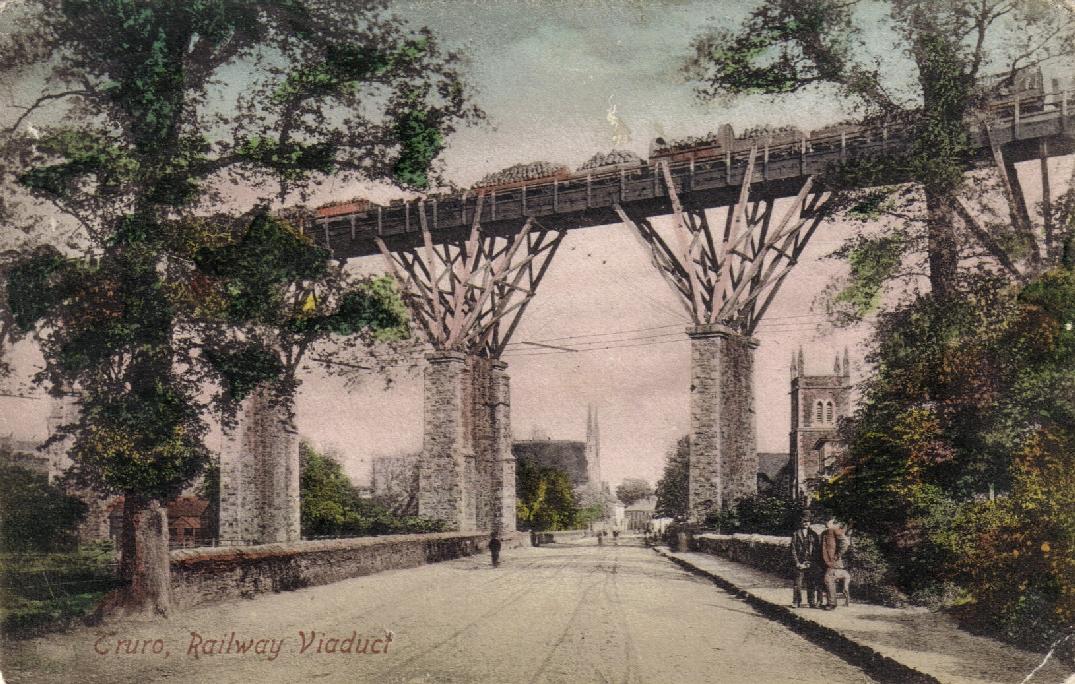
To the north-east of the station is a stone viaduct with views over the city, cathedral and Truro river in the distance. The longest viaduct on the line, it replaced Isambard Kingdom Brunel's wooden Carvedras Viaduct in 1904. Connecting to the main line at Truro is the Maritime Line to Falmouth in the south. Truro's first railway station, at Highertown, was opened in 1852 by the West Cornwall Railway (WCR) for trains to and Penzance; it was known as Truro Road station. It was extended to the Truro river at Newham in 1855, but closed so that Newham served as the terminus. When the Cornwall Railway connected the line to Plymouth, its trains ran to the present station above the city centre. The WCR diverted most passenger trains to the new station, leaving Newham mainly as a goods station until it closed in 1971; it became part of the Great Western Railway. The route from Highertown to Newham is now the Newham Trail, which is a shared-use path on a countryside loop around the south side of the city.
Source: Wikipedia